
Subaru EyeSight Calibration After Windshield Replacement (Austin)
Yes — if your Subaru has EyeSight, recalibration is required after any windshield replacement, and Subaru treats it as mandatory. EyeSight is unusual: it uses two cameras mounted right on the windshield, working together like a pair of eyes, so it’s especially sensitive to how the glass is fitted and calibrated. We recalibrate EyeSight in-house as part of the same appointment anywhere in Austin — no dealership trip. Call (737) 312-2299 and we’ll confirm exactly what your Subaru needs.
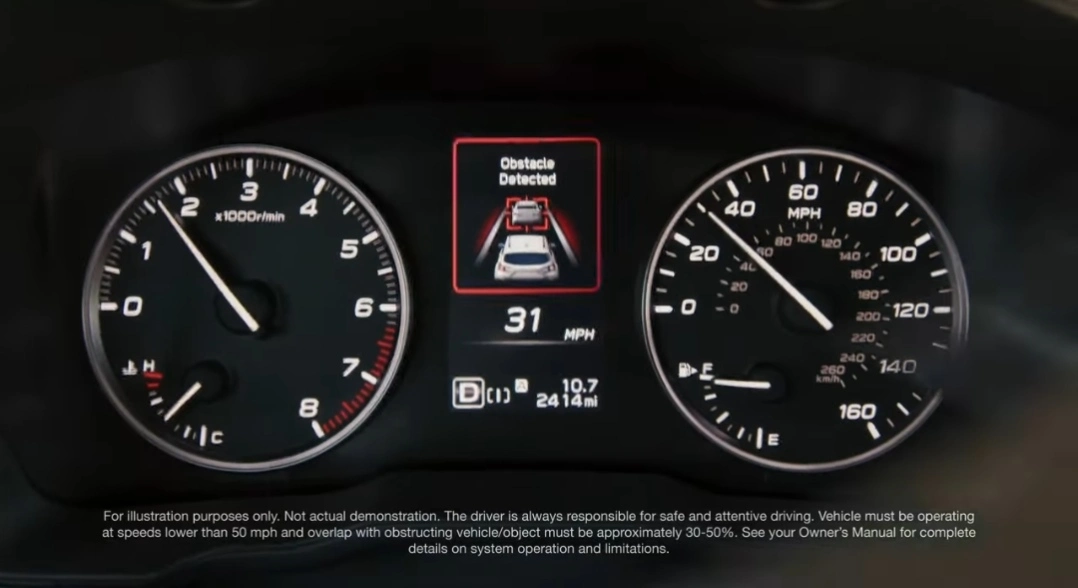
What Is Subaru EyeSight?
EyeSight is Subaru’s driver-assist system, first introduced for the 2014 model year and now standard on most current Subarus. Unlike systems that use a single camera or radar, EyeSight uses two color cameras mounted side by side near the top of the windshield, behind the rearview mirror. This dual-camera setup works like human binocular vision — it judges distance and depth with real precision instead of relying on one flat image. That stereo vision powers Pre-Collision Braking, Adaptive Cruise Control, Lane Keep Assist, and Lane Departure and Sway Warning.
Why EyeSight Calibration Is Different
Most driver-assist systems use one forward camera. EyeSight uses two, and they have to stay in precise alignment with each other to judge depth correctly — that’s what makes EyeSight more sensitive to windshield work than a single-camera system. Because both cameras mount to a bracket on the glass, replacing the windshield changes the surface they’re attached to, and even a millimeter of shift alters where they aim. The new glass can also have slight optical differences in the camera zone. Subaru’s guidance calls for recalibration any time the windshield is replaced on an EyeSight-equipped vehicle. Learn how ADAS calibration works →
How Subaru EyeSight Is Calibrated
EyeSight relies on a static target calibration, and depending on your model year and EyeSight generation it may also need a dynamic step:
- Static calibration — the core of the EyeSight procedure. The car sits level in a controlled space with a Subaru-specified target board at an exact measured distance and height, and a scan tool drives both cameras through a stereo re-learn.
- Dynamic calibration — on many current-generation Subarus, a road drive at a specified speed and distance follows the static step to confirm and refine the alignment. Earlier generations may be static-only.
We follow the Subaru procedure for your specific vehicle — static, or static plus a dynamic drive — and confirm both cameras fall within Subaru’s tight tolerance before we finish.
Which Subaru Models Have EyeSight?
EyeSight has been available since 2014 and is standard on most current Subarus — Outback, Forester, Crosstrek, Impreza, Legacy, Ascent, and more. If your Subaru has the twin camera pod at the top of the windshield behind the mirror, it has EyeSight and needs recalibration after glass work. Driving an Outback or Forester? See our Subaru windshield replacement guide →.
What We Check Before Calibrating
EyeSight calibration only holds if the vehicle’s reference geometry is correct, so before we run it we confirm the windshield adhesive has cured (at least an hour for safe drive-away), your tire pressures and fuel level are within Subaru spec, ride height is normal, the camera pod is properly seated on the new glass, and there are no active EyeSight fault codes. Getting these prerequisites right first is why our calibrations pass to Subaru tolerance the first time.
Subaru EyeSight Calibration Cost in Austin
Recalibration typically adds $150–$350 to a windshield replacement, depending on whether your Subaru needs static only or static plus a dynamic drive. When it’s part of an insurance windshield claim, the recalibration is generally covered under the same claim as a necessary step to restore your vehicle — not a separate deductible. We confirm your coverage before any work. See our windshield replacement service →
Frequently Asked Questions
Does my Subaru need calibration after a windshield replacement?
Yes. If your Subaru has EyeSight, Subaru treats recalibration as mandatory after any windshield replacement, because both cameras are mounted to the glass and their aim shifts when it’s replaced.
Why is Subaru EyeSight calibration different from other cars?
EyeSight uses two cameras working together to judge depth, not one. They must stay in precise alignment with each other, so the system is more sensitive to how the windshield is fitted and calibrated than a single-camera setup.
Does EyeSight need static or dynamic calibration?
EyeSight relies on a static target calibration. Many current-generation Subarus also need a dynamic road drive afterward to confirm alignment, while earlier generations may be static-only. We follow the Subaru procedure for your specific vehicle.
How much does Subaru EyeSight calibration cost?
It typically adds $150–$350 to a windshield replacement depending on whether static only or static plus dynamic is required. On an insurance windshield claim, it’s usually covered under the same claim rather than a separate deductible.
Can you calibrate Subaru EyeSight at my home in Austin?
Yes. We come to you anywhere in Austin, replace the glass, and perform the required EyeSight calibration on-site — no dealership trip needed, usually the same day.
Subaru Windshield Replaced? We Calibrate EyeSight On-Site
Get your Subaru’s glass replaced and EyeSight recalibrated in one visit, anywhere in Austin. Call (737) 312-2299 — same-day mobile service, insurance handled, and we verify every EyeSight feature works before we leave.