
Toyota Safety Sense Calibration After Windshield Replacement (Austin)
Yes — if your Toyota has Toyota Safety Sense (TSS), the windshield camera must be recalibrated after any windshield replacement. The forward-facing camera that runs TSS is mounted to the glass, so removing the windshield breaks the precise factory alignment it depends on. We recalibrate Toyota Safety Sense in-house as part of the same appointment anywhere in Austin — no separate dealership trip. Call (737) 312-2299 and we’ll confirm exactly what your Toyota needs.
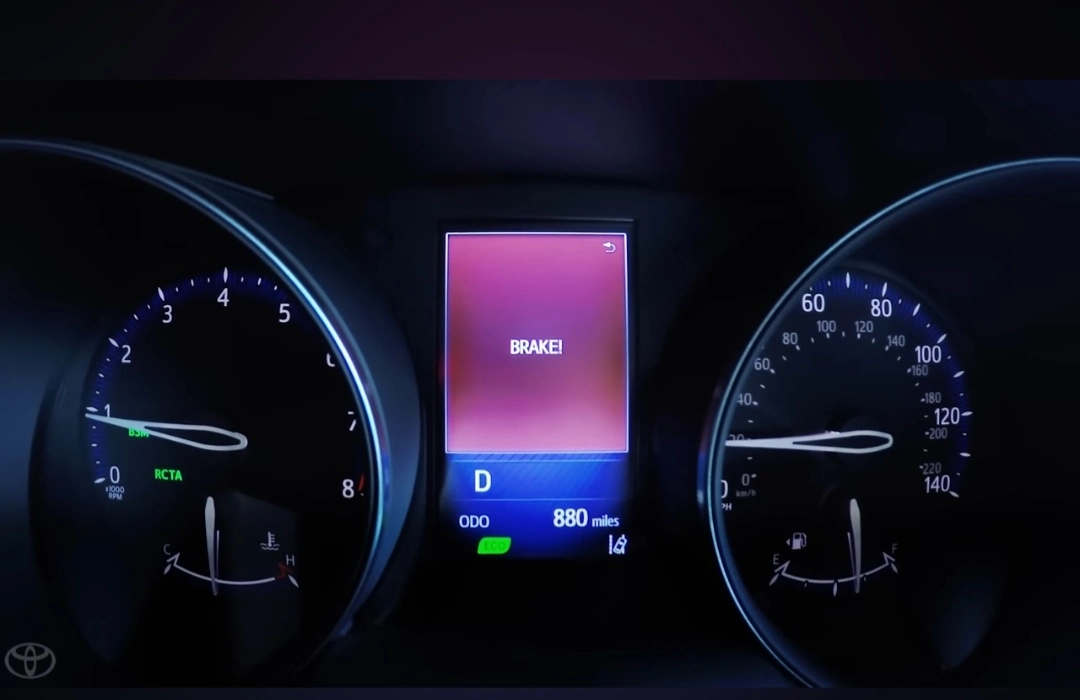
What Is Toyota Safety Sense?
Toyota Safety Sense is Toyota’s suite of driver-assist safety features, built around a single forward-facing camera mounted at the top center of your windshield, just below the rearview mirror — paired with a millimeter-wave radar behind the grille. Together they run the Pre-Collision System (automatic emergency braking), Lane Departure Alert, Lane Tracing Assist, Dynamic Radar Cruise Control, and automatic high beams. Because the camera reads the road through your windshield, the glass and the camera’s aim are part of the safety system.
Why Calibration Is Required After Windshield Replacement
The TSS camera is aligned at the factory to within a fraction of a degree. When your windshield is removed, that precise geometry is broken — and a tiny aim error at the camera becomes a large error far down the road. A camera off by even one degree might “see” lane lines and vehicles several feet from where they actually are. That’s why Toyota’s procedures call for recalibration whenever the windshield is replaced. The system may still appear to work, but it could be reading a road that’s offset from reality. Learn how ADAS calibration works →
Static vs. Dynamic Calibration — What Your Toyota Needs
Toyota Safety Sense uses one or both of two methods, depending on your model, year, and TSS generation:
- Static calibration — done parked in a controlled space, with targets set at Toyota-specified distances and angles while a scan tool runs the routine.
- Dynamic calibration — done on the road, where the camera relearns from real lane markings at set speeds over a set distance.
- Radar re-aim — on newer TSS 3.0 trims, the front radar is a separate paired input that may also need re-aiming.
Some Toyotas need static only, some dynamic only, and many need both. We check your specific vehicle’s Toyota procedure and perform whichever your model requires, with a scan tool confirming the system passes before we finish.
Which Toyota Models Have Safety Sense?
Toyota Safety Sense became widespread from about 2016 onward and is standard on most recent models — Camry, Corolla, RAV4, Highlander, Tacoma, Tundra, and more. If your Toyota has the camera housing at the top center of the windshield and a “TSS” or Safety Sense badge or dashboard menu, it needs calibration after glass work. Driving a RAV4? See our Toyota RAV4 windshield replacement guide →.
What We Check Before Calibrating
Calibration only holds if the fundamentals are right, so before we run it we confirm the windshield adhesive has cured (at least an hour for safe drive-away), your tire pressures are correct, ride height is normal, the camera bracket is properly seated on the new glass, and there are no active fault codes. Getting these prerequisites right first is why our calibrations pass the first time.
Toyota Safety Sense Calibration Cost in Austin
Recalibration typically adds $150–$350 to a windshield replacement, depending on whether your Toyota needs static, dynamic, or both (and radar re-aim on some trims). When it’s part of an insurance windshield claim, the recalibration is generally covered under the same claim as a necessary step to restore your vehicle — not a separate deductible. We confirm your coverage before any work. See our windshield replacement service →
Frequently Asked Questions
Does my Toyota need calibration after a windshield replacement?
If your Toyota has Toyota Safety Sense, yes. The forward camera mounted to the windshield must be recalibrated any time the glass is replaced, or features like pre-collision braking and lane departure alert may not work correctly.
What is the difference between static and dynamic Toyota Safety Sense calibration?
Static calibration is done parked, using targets at set distances and a scan tool. Dynamic calibration is done on the road, where the camera relearns from real lane markings. Your Toyota may need one or both, depending on model and TSS generation.
How much does Toyota Safety Sense calibration cost?
It typically adds $150–$350 to a windshield replacement depending on whether static, dynamic, or both are required. On an insurance windshield claim, it’s usually covered under the same claim rather than a separate deductible.
Can you calibrate Toyota Safety Sense at my home in Austin?
Yes. We come to you anywhere in Austin, replace the glass, and perform the required Toyota Safety Sense calibration on-site — no dealership trip needed, usually the same day.
What happens if I don’t recalibrate Toyota Safety Sense?
An uncalibrated camera can misjudge lane position and following distance, so pre-collision braking and lane tracing may react late, early, or inconsistently — even with no warning light on. Recalibration restores the system to Toyota’s specification.
Toyota Windshield Replaced? We Calibrate TSS On-Site
Get your Toyota’s glass replaced and Toyota Safety Sense recalibrated in one visit, anywhere in Austin. Call (737) 312-2299 — same-day mobile service, insurance handled, and we verify every TSS feature works before we leave.